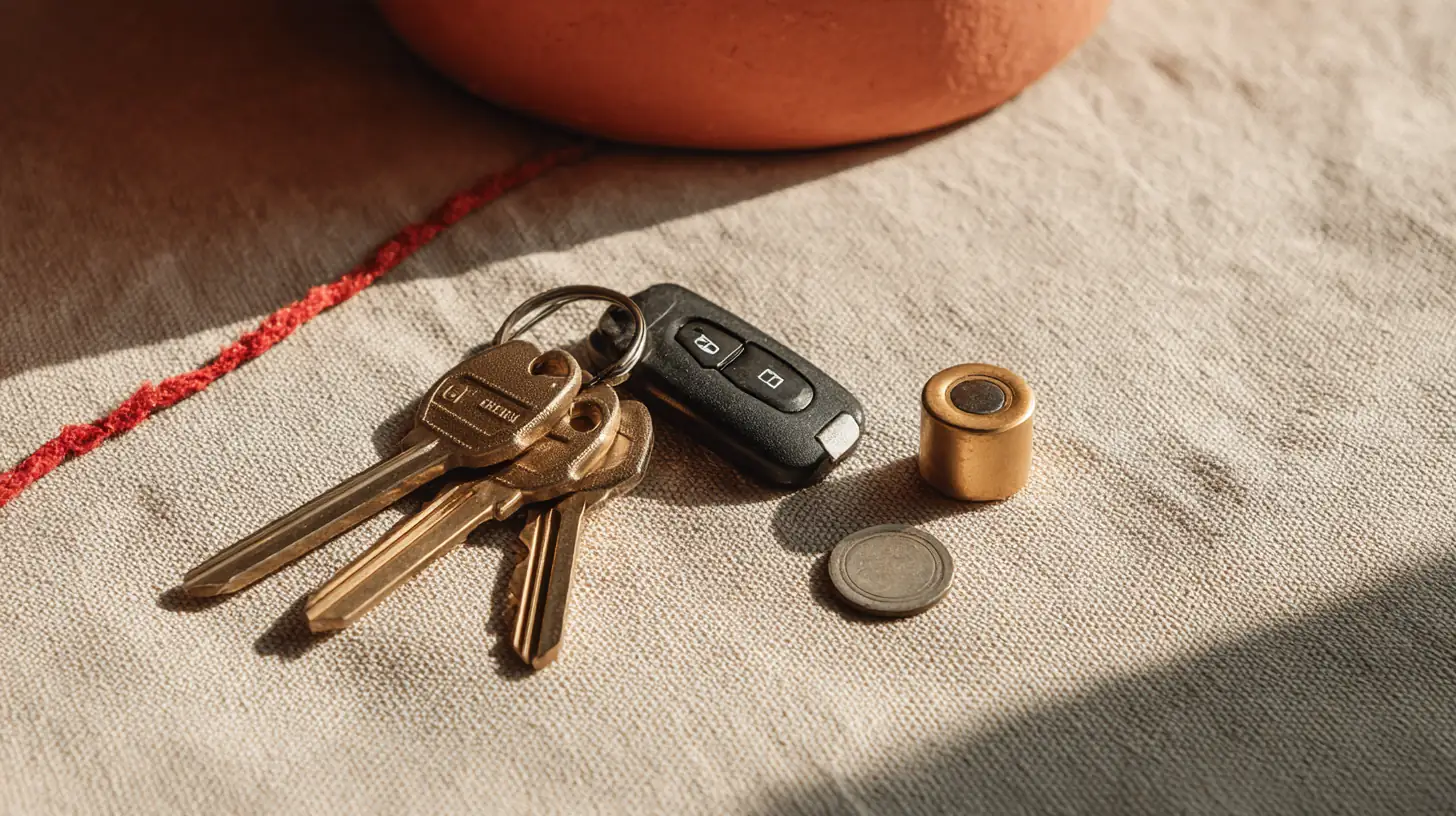
Emergency Services26 min read
Car Key Fob vs Traditional Key: Which Is Better?

By Roadrunner Lock and Key ·
A key fob is more convenient and, on most cars, harder to copy than a metal key, but it costs more to replace and passive-entry fobs can be relayed by thieves. A traditional key, or a transponder key without a remote, is cheaper and immune to relay attacks. The right choice depends on what your car accepts.[1][2]
Key fob vs key is also a theft question in Albuquerque. The Albuquerque Police Department averaged about 10,000 auto thefts a year in 2016 and recorded under 4,000 in 2025, and its December 2, 2025 release put thefts down 42% year to date against 2024.[3] What most key fob vs key guides leave out is which key a thief can actually beat. This guide defines the four kinds of car key, sets those Albuquerque numbers against what each key protects, and gives the steps to start your car when the fob battery dies.
Looking to choose between a car key fob and a standard key? Here's the quick answer:
Key fobs are modern, convenient, and packed with features like keyless entry, remote start, and enhanced security. However, they cost more to replace (Consumer Reports put the fob alone at $50 to $400 by brand in 2019, before programming),[1] and passive-entry fobs are vulnerable to high-tech theft methods like relay attacks.[2]
Traditional keys are simple, reliable, and much cheaper to replace, because a plain key with no chip is cut from an inexpensive blank.[1] They're immune to electronic hacking but lack advanced features and are easier to duplicate or tamper with.
Quick Comparison
| Feature | Key Fobs | Traditional Keys |
|---|---|---|
| Cost to Replace | $50 to $400 for the fob by brand, plus $50 to $100 to program it and cut a backup key (Consumer Reports, 2019)[1] | The least expensive key to copy when it has no chip[1] |
| Convenience | Keyless entry, remote start | Manual locking/unlocking |
| Security | Encryption, rolling codes | Susceptible to lock-picking |
| Vulnerabilities | Relay attacks, battery issues | Duplication, hot-wiring on cars without an immobilizer[4] |
| Durability | Prone to electronic failure | Long-lasting, mechanical wear |
| Extra Features | Remote start, panic button | None |
If you value convenience and advanced features, go for a key fob. If you prefer simplicity and low cost, stick with a traditional key. Keep reading for their pros, cons, and security considerations.
Four Kinds of Car Key, Defined
Most new cars use one of four kinds of key, according to Consumer Reports: a basic key with a security chip (a transponder key), an ignition key plus a separate remote, a key fob with remote locking and push-button start, and a keyless-entry fob you can leave in a pocket or purse for nearly every function.[1] Relay units target cars with a keyless remote and push-button start.[2]
A transponder key looks like a plain metal key, but its head holds a chip the car checks before the engine will run. That check is the job of the engine immobilizer, which Consumer Reports describes as a feature that prevents a car from starting without a key.[4] A plain metal key with no chip does none of that. It only matches the cuts in the lock.
| Key type | How it opens the door | How it starts the car | Can a relay device fake it? |
|---|---|---|---|
| Plain metal key (no chip) | Turned in the door lock | Turned in the ignition | No: there is no signal to extend |
| Transponder key | Turned in the door lock | Turned in the ignition; the immobilizer reads the chip[4] | No: relay units target cars with a keyless remote and push-button start[2] |
| Remote fob or remote head key | Button press (rolling code)[1] | Key turned or push button, by model | Door: no, it needs a button press. Push-button start models: relay units target cars with a keyless remote and push-button start[2] |
| Passive keyless-entry fob (smart key) | Car unlocks when the fob is near | Push button with the fob inside | Yes: tested on more than 850 cars by ADAC[5] |
Car Key Fobs: Features, Benefits, and Drawbacks
A car key fob adds remote buttons, and on many cars keyless entry and push-button start, to the chip that lets the car recognize its key. The benefit is convenience and a code that changes with each press. The drawback is cost, a battery to replace, and, on keyless fobs with push-button start, exposure to relay theft.[1][2]
Features and Functionality
Car key fobs rely on short-range radio signals to communicate with vehicles. Basic key fobs typically include buttons for locking, unlocking, trunk release, and activating a panic alarm. Meanwhile, smart key fobs take things up a notch by enabling keyless entry, ignition, and even remote start functionality.
Advanced models work directly with car systems, offering features like unlocking doors as you approach the vehicle and starting the engine with just a button press. Remote start capabilities let you adjust your car's temperature before stepping inside, a lifesaver during scorching summers or freezing winters. Some fobs even allow users to customize settings like seat positions and mirror adjustments. Consumer Reports notes that on many key fobs you can lower all the windows by pressing unlock once, then pressing it again and holding it, a feature that is rarely labeled on the fob.[6] Many cars also let you switch off proximity unlocking in the settings menu, which adds a layer of protection against relay attacks.[6]
These advancements make key fobs more than just a tool for unlocking doors, they're a gateway to added convenience and control.
Benefits
Key fobs offer unmatched convenience. Keyless entry means you can unlock your car without digging through your bag or pockets, perfect when your hands are full.
From a security standpoint, key fobs are a step up from traditional keys. They use encrypted signals and rolling code technology, which generates a new code with each use, making them much harder to clone or hack.[1] Some models even include features like panic buttons or the ability to disable keyless entry, offering additional protection against relay attacks.
Battery life is another plus for a key fob. Most fobs run on a coin cell such as the CR2032, a 3.0-volt lithium cell with a typical capacity of 235 mAh and a self-discharge of about 1% a year,[7] so a spare fob sitting in a drawer barely drains its cell.
Drawbacks
However, key fobs aren't without their downsides. Replacing or programming a key fob can be expensive compared to traditional keys. Battery dependency also introduces the risk of being locked out if the battery dies unexpectedly.
Despite their encryption, keyless systems are still vulnerable to relay attacks, a method used by thieves to extend the fob's signal and gain access to the vehicle. When the National Insurance Crime Bureau tested a relay unit, it found the device worked on many cars with a keyless remote and push-button start, and "it was also able to start the majority of them".[2] Criminals use devices to trick the car into thinking the fob is nearby, even if it's not.
The usual precautions are simple: keep the fob in a case that blocks its signal, and switch off the keyless feature if your car offers that option.[6][8]
Electronic malfunctions are another concern, often caused by weather exposure, hardware issues, or interference from other devices. Additionally, some users find the buttons on fobs confusing, especially in low-light conditions. As Jake Fisher, senior director of auto testing at Consumer Reports, points out:
"Key fobs need to be labeled more clearly, regardless of whether they have hidden tricks or not," Fisher says. "It's hard to even tell the difference between 'lock' and 'unlock' on some key fobs, especially at night."[6]
Accessibility can also be an issue. Small buttons may be difficult for some users to operate,[6] and keyless ignition systems can lead drivers to leave the engine running by mistake, which the National Highway Traffic Safety Administration says raises the chance of a rollaway or of carbon monoxide poisoning in an enclosed space such as a garage.[9]
To counter these risks, storing your key fob in a Faraday pouch or a metal container can block its signal and prevent relay attacks.[8] These protective pouches are affordable and provide a simple way to safeguard your vehicle. By understanding both the conveniences and vulnerabilities of key fobs, you can make informed decisions about their use and security.
Replace or program a fob where your car is parked. We will quote the exact price on the phone before we come. Call (505) 347-2895
Roadrunner Lock and Key does key fob replacement and programming 24/7.
Standard Car Keys: Features, Benefits, and Drawbacks
A standard car key is a metal key cut to match a car's door lock and ignition. It needs no battery and cannot be relayed, which makes it cheap and dependable. Its weak points are copying, wear, and, on a car with no engine immobilizer, an ignition a thief can bypass. Many standard-looking keys on newer cars also carry a transponder chip.[1][4]
Features and Functionality
Standard car keys rely on a time-tested mechanical system. These keys are designed with cuts that match a vehicle's lock and ignition, so the key turns only the cylinders it was cut for. To use them, you insert the key manually to lock, unlock, or start the vehicle. Their straightforward design is what makes them dependable and easy to use.
Benefits
One of the biggest advantages of traditional car keys is their simplicity. Since they operate mechanically, they don't rely on electronic components or batteries. This means you won't have to deal with issues like dead batteries or electronic failures, which can leave you locked out of your car. Plus, they keep working in heat and cold, because there is no battery to fail.
Another perk? They're affordable. Replacing or duplicating a traditional key is much cheaper compared to electronic key fobs. Consumer Reports put the fob alone at $50 to $400 depending on the brand in 2019,[1] while a plain metal key with no chip is cut from an inexpensive blank. You can easily get duplicates made at hardware stores or locksmiths.
Standard keys also avoid the electronic vulnerabilities that can make modern systems susceptible to hacking or signal interference. Their mechanical nature keeps them immune to these high-tech threats.
Drawbacks
Despite their benefits, standard car keys come with their own set of limitations. Their simplicity, while a strength, also makes them more susceptible to traditional tampering methods. A plain key with no chip can be copied almost anywhere, and on a car with no engine immobilizer a thief does not need the key at all to start it: Consumer Reports, citing the Highway Loss Data Institute, reports that many older Hyundai and Kia models without immobilizers were stolen by breaking in and bypassing the ignition.[4]
The lack of advanced security features, like encryption or remote access, leaves these keys vulnerable to theft. They can be easily copied, which makes it hard to control who has access to your vehicle. Once duplicated, it's nearly impossible to track or restrict their use.
Over time, physical wear can also become an issue. Repeated use can cause the metal to degrade, making the key harder to turn or even leading to breakage inside the lock. This wear and tear not only affects functionality but can also compromise security.
When compared to modern alternatives, traditional keys fall short in terms of convenience. They require manual insertion into the ignition and door locks, which can feel outdated compared to keyless systems. Features like remote unlocking, push-button start, or the ability to pre-condition your car's interior temperature are completely absent. You must be physically near the vehicle to unlock it, and there's no way to control access remotely. For those accustomed to modern conveniences like panic buttons, trunk release, or lowering windows remotely, standard keys can feel limiting.
In short, while standard car keys are reliable and cost-effective, they lack the security, convenience, and advanced features that newer technologies provide.
Security Comparison
On security, key fob vs key comes down to the attack. A fob with a rolling code is harder to copy than a plain metal key, but a passive-entry fob can be relayed: in ADAC's August 2026 tally of more than 850 keyless cars, almost half still opened with an extended signal and about one in three started.[5] A metal key cannot be relayed. No signal, nothing to extend.
Albuquerque shows why the attack matters more than the key. APD's auto thefts fell from about 10,000 a year in 2016 to under 4,000 in 2025, and the December 2, 2025 release credited license plate readers, bait cars, the Grappler and the drone unit, not a change in car keys.[3] Under 4,000 a year still works out to fewer than 11 stolen cars a day on average. "This 42% drop represents stolen cars recovered, firearms seized, and repeat offenders taken off our streets," Mayor Tim Keller said in that release.[3] Nationally, Consumer Reports, citing the National Insurance Crime Bureau, reported thefts down 23% in the first six months of 2025, with 334,114 vehicles still stolen in those six months.[4]
When it comes to vehicle security, both traditional keys and key fobs have their own vulnerabilities that modern thieves can exploit. Understanding these risks is essential when comparing the two systems.
Traditional keys are susceptible to lock picking, duplication, and hot-wiring on cars without an immobilizer.[4] If a traditional key is lost or stolen, there's no way to switch it off, so it keeps working until the locks are rekeyed or replaced.
On the other hand, key fobs rely on encryption and rolling codes for added security. However, they're not foolproof. Relay attacks, where criminals extend the fob's signal to unlock and start a car, still work on many keyless cars: ADAC reports that almost half of the more than 850 cars in its database could be opened with an extended signal and about one in three could be started.[5]
Despite these challenges, key fobs do offer certain advantages. They feature synchronized receivers and transmitters, utilize pseudo-random unlock sequences, and are much harder to duplicate compared to traditional keys. A replacement fob or chip key also has to be programmed to the car before it will start it.[1] If you lose one, ask whether the lost key can be erased from the car's memory when the remaining keys are reprogrammed; a plain metal key can't be erased at all.
Here's a quick look at how the two systems compare:
Comparison Table: Security Features
| Security Aspect | Traditional Keys | Key Fobs |
|---|---|---|
| Theft Method | Lock picking, duplication, hot-wiring on cars without an immobilizer[4] | Relay attacks, signal jamming, cloning[5][4] |
| Tested weakness | Older cars with no immobilizer can be started by bypassing the ignition[4] | ADAC, 2026: almost half of 850+ keyless cars opened by an extended signal; about one in three started[5] |
| Duplication Risk | Easy and inexpensive to duplicate (no chip) | Requires specialized equipment |
| Shutting out a lost key | Not possible; rekey or replace the locks | Ask whether the lost fob can be erased from the car's memory |
| Encryption | None (mechanical) | Rolling-code encryption[1] |
| Signal Interception | Not applicable | Vulnerable to signal capture[4] |
The threats faced by each system differ significantly. Traditional keys are primarily targeted through mechanical methods, requiring physical tools and expertise. In contrast, key fobs are vulnerable to high-tech attacks by criminals using electronic devices. A pouch with a metal lining keeps a nearby device from picking up the fob's signal; Consumer Reports names the Faraday bag as one way to block it.[8]
Looking ahead, Ultra-wideband (UWB) technology shows promise in addressing these vulnerabilities. ADAC rates UWB keyless systems as well secured by the current state of the art, and says some makers have switched to it while many still use the older, unsafe standard.[5] Before you buy, ask whether the car's keyless system uses UWB.
While key fobs bring advanced protection against traditional theft methods, they also introduce new risks that demand extra precautions. Weigh those risks against cost and convenience before you choose.
What Happens When a Fob Battery Dies
A dead fob battery rarely locks you out for good. Many push-button cars hide a mechanical key inside the fob that opens the driver's door, and some cars can still read a fob with a dead battery when you hold it against the start button or another marked spot, according to Consumer Reports.[6] Then replace the coin cell.
- Push the release button on the fob and slide out the mechanical key.[6]
- Find the key slot on the driver's door. It may be on the handle, hidden behind the handle, or under a small plastic cap beside it.[6]
- Unlock the door with the key.
- Hold the fob against the start button, or the spot your owner's manual shows on the steering column or center console, and press start. Some cars read the fob by near field communication even with a dead battery.[6]
- Replace the coin cell. Match the number printed on the old cell; a CR2032, for example, is a 3.0-volt lithium coin cell.[7]
- If the fob still fails with a new cell, it may need reprogramming or replacement.
The CR2032 is rated to operate from -30 C to 60 C, which is -22 F to 140 F.[7] At the Albuquerque International Sunport, the normal January low is 26.4 F and the normal July high is 91.2 F (NOAA 1991 to 2020 normals).[10] The January low sits 48.4 degrees above the cell's floor and the July high sits 48.8 degrees below its ceiling, so ordinary Albuquerque weather alone does not take a healthy cell out of its rating.
Cost, Durability, and Practical Considerations
A key fob costs more to replace than a metal key. "The cost to replace the latest key fobs can run anywhere from $50 to as high as $400 depending on the brand," Consumer Reports analyst Mel Yu said in 2019, and programming plus a mechanical backup key add $50 to $100.[1] A plain metal key is cut from an inexpensive blank.
When deciding between key fobs and traditional keys, weighing their cost, durability, and practicality can help you determine what best suits your needs.
Cost
Traditional keys are generally more affordable. Key fobs are pricier. Consumer Reports priced several replacements in 2019; the table below shows what it found. These are published third-party figures from 2019, not Roadrunner's prices.
| Replacement (Consumer Reports test, 2019) | Price reported | Source |
|---|---|---|
| Latest key fobs, fob only | $50 to $400 by brand | Consumer Reports, 2019-05-04[1] |
| Programming and a new mechanical backup key | Add $50 to $100 | Consumer Reports, 2019-05-04[1] |
| 2017 Hyundai Ioniq smart fob, dealer total | $428.92 | Consumer Reports, 2019-05-04[1] |
| Same Ioniq, official fob bought online, dealer programming, backup key | $272.42 | Consumer Reports, 2019-05-04[1] |
| 2019 Chevrolet Malibu fob (keyless entry, push-button start, remote start) | $147.98 quoted | Consumer Reports, 2019-05-04[1] |
| 2015 VW Jetta fob, laser-cut key and programming at the dealer | About $225 | Consumer Reports, 2019-05-04[1] |
| Audi fob with programming | $500 average (as told to CR) | Consumer Reports, 2019-05-04[1] |
| 2009 Honda Pilot spare fob, cut and programmed by a mobile locksmith | $125 total | Consumer Reports, 2019-05-04[1] |
For the broader picture, see what a fob costs to replace and locksmith prices in Albuquerque. If the fob dies with the keys locked inside, Thumbtack's Albuquerque locksmith page (no page date shown; read October 16, 2026) gives about $65 as an example flat rate for a standard-vehicle car lockout, higher after hours or for long distances; that is a third-party figure, not Roadrunner's price.[11]
Before paying for a new key fob, Consumer Reports advises checking your car's basic warranty, insurance, or roadside assistance coverage, and notes that some extended warranties and new-car dealers offer key-fob insurance.[1] Dealerships sell the original-equipment fob, and they are typically the costliest option. Locksmiths can often provide quicker and more budget-friendly alternatives: one mobile locksmith told Consumer Reports, "I can usually come in at 30-50 percent less than the dealer, price-wise".[1] If you're tech-savvy, buying and programming a key fob yourself might save you money, but not all vehicles allow for this; on most models that do, you need two working keys to program a third.[1]
Cost isn't the only factor, durability also plays a big role in determining long-term value.
Durability
Traditional keys are known for their toughness, thanks to their simple metal design. On the other hand, key fobs are more delicate due to their internal electronics, which are vulnerable to impacts, moisture, and extreme temperatures.
A dead battery can render a key fob useless, and damage to its circuitry often requires a full replacement rather than a simple repair. When only the case is broken, Consumer Reports found the circuitry can be moved into a new shell.[1] To prolong the life of a key fob, consider using protective cases or covers to shield it from physical damage and moisture. Storing it in a dry place and avoiding contact with liquids can also help minimize wear and tear.
Durability and cost inevitably tie into how these keys perform in everyday situations.
Practical Scenarios
Key fobs shine in terms of convenience. Features like remote start, climate control, and personalized driver settings make them a favorite for urban drivers and families. Meanwhile, traditional keys are perfect for those who prioritize simplicity and reliability. They're especially well-suited for rural areas or harsher environments where durability and lower replacement costs are key considerations.
For budget-conscious drivers, traditional keys are often the go-to choice due to their lower maintenance and replacement costs. On the other hand, individuals focused on security may find the higher price of smart keys worthwhile for their advanced protection features, despite the added expense.
Regardless of your choice, keeping a second working key is a smart move: on most cars that let owners program their own fobs, you need two working keys to add a third.[1]
Choosing the Right Solution for Your Needs
Choose by what your car accepts first, then by priority. If your car has push-button start, you need a programmed fob; pick convenience and keep a second key. If it takes a turn key, a transponder key is the cheaper, relay-proof choice. Most new cars come with push-button start, keyless entry, or both.[1]
Assessing Your Priorities
When deciding between key systems, your priorities should guide your choice. If convenience is what matters most, key fobs are an excellent option. They let you unlock your car from a distance, start the engine remotely on frosty mornings, and even pop the trunk when your hands are full. These features make everyday life much easier, which is why many people lean toward vehicles equipped with key fobs.
On the other hand, if keeping costs low and sticking to simplicity are more important, a traditional key is the better pick. They don't rely on batteries, aren't affected by signal interference, and are much cheaper to replace.
The age of your vehicle also plays a big role. Most newer cars are designed to work with key fobs for both unlocking and starting the engine.[1] Meanwhile, traditional keys are more common in older vehicles. If you drive a newer model, you'll likely need a key fob, but professional locksmiths can ensure it's set up securely and works without a hitch.
For those who want the best of both worlds, consider a hybrid approach. Use your key fob for daily convenience, keep a second programmed key, and learn where the mechanical key inside your fob is and how your car reads a fob with a dead battery.[6] This way, you're prepared for situations like a dead fob battery or signal interference.
With your specific priorities in mind, you can work with a locksmith to find the ideal setup for your needs.
Roadrunner Lock and Key Services
No matter your choice, having expert locksmith support keeps your key system working. In Albuquerque, NM, Roadrunner Lock and Key works 24/7 from its shop at 3803 3rd St NW and replaces, programs and troubleshoots key fobs where your car is parked.
The team specializes in key fob replacements and reprogramming for modern vehicles, as well as traditional key cutting and transponder programming for older models. They aim to provide reliable solutions while maintaining competitive pricing.
For newer vehicles, they handle smart key replacements and reprogramming to ensure everything integrates smoothly with your car's systems.
Any locksmith who makes a car key should check that you own the car first: Thumbtack notes that a locksmith must verify you are the owner, and that you'll need proof of ownership along with the vehicle identification number (VIN).[11]
Conclusion
The better key is the one your car accepts, protected the right way. A plain or transponder key is cheaper and cannot be relayed. A key fob is easier to live with and harder to copy, and a passive-entry fob needs a signal-blocking pouch or its proximity unlock switched off, because ADAC still opened almost half of the more than 850 keyless cars it tested with an extended signal.[5] Albuquerque's auto thefts fell to under 4,000 in 2025;[3] that is still close to 11 cars a day on average, so the precautions are worth the minute they take.
Three things to do this week: find the mechanical key in your fob, note the coin cell number printed on its battery, and make sure you have a second working key. If you're down to one key, or none, that's the time to call.
Replace or program a fob where your car is parked: call or text Roadrunner Lock and Key at (505) 347-2895. Text your year, make and model, and we will quote the exact price on the phone before we come.
FAQs
No question matches that. Call or text (505) 347-2895 and ask it.

Roadrunner Lock and KeyAnswers from the shop
Open 24/7
Pick a question, or search above. You get the straight answer, the way we would give it on the phone.
What steps can I take to protect my key fob from relay attacks and keep my car secure?
To keep your key fob safe from relay attacks and boost your car's security, think about using a signal-blocking Faraday pouch or case whenever it's not in use. These pouches block the signal, making it harder for thieves to intercept. Also, avoid placing your key fob near doors or windows, as these spots make it easier for signals to be amplified.
If your key fob has an option to disable its wireless signal, make sure to activate it when you're not driving. For added protection, consider using a Faraday box or even wrapping your key fob in aluminum foil to block electromagnetic signals. These simple steps can help reduce the risk of car theft significantly.
Roadrunner Lock and Key
How do the long-term costs of replacing a key fob compare to a traditional car key?
Replacing a car key fob can be a pricey affair compared to a traditional key. Consumer Reports put the fob alone at $50 to $400 depending on the brand in 2019, plus $50 to $100 to program it and cut a mechanical backup key. A plain metal key with no chip is cut from an inexpensive blank.
While key fobs come with modern conveniences like remote locking and push-button start, their replacement costs can quickly add up. Traditional keys, being simpler in design, are far easier on the wallet, making them a more economical choice for many car owners.
Roadrunner Lock and Key
How can I make my car key fob last longer?
To make sure your car key fob lasts as long as possible, here are a few easy tips to keep in mind:
- Steer clear of extreme temperatures: Protect your key fob from direct sunlight, intense heat, or freezing cold, as these conditions can harm its internal parts.
- Stay on top of battery changes: Keep an eye on the battery's performance and replace it when necessary to avoid any interruptions in functionality.
- Handle with care: Try not to drop or mishandle your key fob, as physical damage can compromise its operation.
- Keep it clean and dry: Moisture or dirt can mess with the electronics, so ensure your key fob stays dry and free of debris.
By taking these precautions, you can help ensure your key fob stays in good working condition for years to come.
Roadrunner Lock and Key
Is a key fob the same as a key?
No. A key is the part that matches your car, by its cuts and, on most newer cars, a chip the immobilizer reads before the engine will start. A key fob is the remote: it locks and unlocks the doors by radio, and on push-button cars it also tells the car the key is inside. Many fobs still hide a metal key for the door. Consumer Reports sorts car keys into four kinds: a chip key, an ignition key with a separate remote, a fob with push-button start, and a keyless-entry fob you never take out of your pocket. If your car has push-button start, the fob is the key.
Roadrunner Lock and Key
Can I use my key instead of a key fob?
Sometimes. On a car you start by turning a key, the key does everything the fob does except the remote buttons, so you can lock, unlock and drive with the key alone. On a push-button car, the metal key inside the fob opens the driver's door, but the car still has to detect the fob to start; some cars do that when you hold a dead fob against the start button or a marked spot. A metal key cut for the door will not start a push-button car on its own. If your fob is lost, not just dead, you need a replacement programmed to the car.
Roadrunner Lock and Key
What are the disadvantages of using a fob key?
Four. A fob costs more to replace: Consumer Reports put the fob alone at $50 to $400 by brand in 2019, plus $50 to $100 for programming and a backup key. It runs on a battery that eventually needs replacing. A passive-entry fob can be relayed: ADAC still opened almost half of more than 850 keyless cars with an extended signal in its 2026 tally. And fob buttons can be hard to read; Consumer Reports' Jake Fisher said "It's hard to even tell the difference between 'lock' and 'unlock' on some key fobs, especially at night". A signal-blocking pouch and a spare key handle most of it.
Roadrunner Lock and Key
6 questions
References
- Mike Monticello, Consumer Reports. How to Replace Your Car's Key Fob. May 4, 2019. Read October 16, 2026. consumerreports.org/cars/car-maintenance/how-to-replace-your-car-key-fob-a4802255222/
- National Insurance Crime Bureau. Ahead of the Curve: 2016 Annual Report. 2017 (PDF created May 5, 2017). Read October 16, 2026. nicb.org/sites/default/files/2017-10/2016-Annual-Report.pdf
- Albuquerque Police Department (City of Albuquerque). APD Turns the Tide on Auto Theft: From 10,000 Stolen Cars a Year in 2016 to Fewer Than 4,000 in 2025. December 2, 2025. Read October 16, 2026. cabq.gov/police/news/apd-turns-the-tide-on-auto-theft-from-10-000-stolen-cars-a-year-in-2016-to-fewer-than-4-000-in-2025
- Jeff S. Bartlett, Consumer Reports. How to Keep Your Car From Getting Stolen. Updated December 18, 2025. Read October 16, 2026. consumerreports.org/money/theft/how-to-keep-your-car-from-getting-stolen-car-theft-a2434454434/
- ADAC e.V. Zehn Jahre Keyless-Test: Oft noch unsicher (press release, in German). August 18, 2026. Read October 16, 2026. presse.adac.de/meldungen/adac-ev/technik/zehn-jahre-keyless-test-oft-noch-unsicher.html
- Mike Monticello, updated by Stef Schrader, Consumer Reports. Your Car's Key Fob Has Hidden Features. Here's How to Find Them. Updated August 5, 2026. Read October 16, 2026. consumerreports.org/cars/cars-driving/your-cars-key-fob-may-have-hidden-features-a1624501968/
- Energizer. CR2032 Lithium Coin product datasheet (form 2032NA0618). June 12, 2018. Read October 16, 2026. data.energizer.com/pdfs/cr2032.pdf
- Jeff Plungis, Consumer Reports. Companies Target the Next Car Hack Attack. January 29, 2019. Read October 16, 2026. consumerreports.org/automotive-technology/companies-target-the-next-car-hack-attack/
- National Highway Traffic Safety Administration. Federal Motor Vehicle Safety Standards; Theft Protection and Rollaway Prevention (proposed rule), 76 FR 77183, Docket NHTSA-2011-0174. December 12, 2011. Read October 16, 2026. govinfo.gov/content/pkg/FR-2011-12-12/html/2011-31441.htm
- NOAA National Centers for Environmental Information. U.S. Climate Normals 1991-2020, monthly: Albuquerque International Sunport (USW00023050). 1991-2020 normals. Read October 16, 2026. ncei.noaa.gov (Climate Normals 1991-2020 data service, station USW00023050)
- Thumbtack. Locksmiths in Albuquerque, NM (cost section). No page date shown. Read October 16, 2026. thumbtack.com/nm/albuquerque/locksmiths