Locksmith Guides19 min read
Home Security Checklist: 10 Ways to Protect Your Property

By Roadrunner Lock and Key ·
Want to secure your home effectively? Start with these 10 proven steps to deter break-ins and keep your property safe.
In the U.S., FBI data for 2018 counted one burglary about every 26 seconds, with an average loss of $2,799 per offense. Yet, simple upgrades like reinforced locks, motion-activated lights, and a professional security system can reduce risks significantly. Here's a quick overview of the key strategies:
- Upgrade Exterior Door Locks: Use ANSI Grade 1 deadbolts and reinforce strike plates with 3-inch screws.
- Install Motion-Activated Lights: Illuminate entry points and blind spots to deter intruders.
- Secure Windows: Add pin locks, security film, and track blockers for extra protection.
- Invest in a Security System: In one survey of convicted burglars, 60% said an alarm would send them to another target.
- Add Security Cameras: Cover main entry points and use cameras with night vision and remote monitoring.
- Reinforce Door Frames: Strengthen hinges and frames to resist forced entry.
- Secure Sliding and Garage Doors: Use anti-lift devices and upgrade garage-to-house doors.
- Update Smart Device Codes: Replace default settings, use strong passwords, and enable two-factor authentication.
- Create a Nightly Routine: Lock doors, arm your system, and close blinds every night.
- Take Action: Combine physical barriers and visible deterrents to make your home less appealing to burglars.
10-Step Home Security Checklist to Protect Your Property
Must-know DIY Home SECURITY Tips For Homeowners
1. Upgrade and Replace Exterior Door Locks
Your exterior door locks are the frontline of your home’s security. Investing in high-quality deadbolts can make a big difference in protecting against break-ins. In 2018 FBI data, 56.7% of burglaries involved forcible entry, and weak locks or frames are often what gives way.
A reliable deadbolt should have a one-inch throw, this is how far the bolt extends into the door frame, making it harder to pry open. To resist drilling, look for locks with hardened steel components, including anti-drill pins and plates. But even the best lock is only as strong as its installation. Swap out the standard 3/4-inch screws for 3-inch screws that anchor into the wall stud. This simple upgrade, costing around $5, can significantly improve your door’s resistance to forced entry.
If you’ve recently moved, lost a key, or had contractors working on your home, it’s smart to rekey or replace your locks. You never know who might have copies of old keys. Roadrunner Lock and Key offers professional rekeying services, giving you peace of mind without the expense of replacing all your hardware.
Choose ANSI Grade 1 or 2 Deadbolts
When it comes to deadbolts, not all locks are created equal. The American National Standards Institute (ANSI) and the Builders Hardware Manufacturers Association (BHMA) grade locks from 1 to 3 based on their strength and durability. Grade 1 locks are the toughest: Schlage says an ANSI Grade 1 deadbolt must withstand 250,000 cycles and 10 door strikes with a hammer, and the BHMA standard applies a 1,350-pound force against the bolt for Grade 1. Grades 2 and 3 are held to lower benchmarks.
For the best protection, use Grade 1 deadbolts on all main exterior doors, including the door connecting your garage to your house. Grade 2 locks are a good option for secondary exterior doors, balancing security and cost. Avoid Grade 3 locks for any exterior entry, they simply don’t offer enough protection.
| Feature | Grade 1 (Highest) | Grade 2 (Moderate) | Grade 3 (Basic) |
|---|---|---|---|
| Primary Use | Exterior/Commercial | Residential Exterior | Interior Doors Only |
| Door Strikes (deadbolt) | 10 strikes | Lower benchmark | Lower benchmark |
| Cycle Test (deadbolt) | 250,000 cycles | Lower benchmark | Lower benchmark |
| Bolt Force Test | 1,350 lbs | Lower benchmark | Lower benchmark |
| Cost Range | $25 to $60 (traditional) $200 to $250 (high-security) $200 to $320 (smart) |
Varies | Not recommended for exterior |
Rekey Locks for Better Security
Rekeying is a cost-effective way to secure your home without replacing the entire lock. By changing the internal pins, your lock will work with a new key, rendering old keys useless. This is especially helpful if you’ve lost a key, had a break-in, or suspect someone might have unauthorized access.
Professional rekeying services typically start at $25 per lock, while installing new locks starts at $60. Roadrunner Lock and Key offers expert rekeying to help you regain exclusive access to your home without breaking the bank. They can also set up a master key system, letting you use one key for multiple locks, a convenient solution that eliminates juggling multiple keys.
To further enhance your home’s security, consider adding motion-activated outdoor lighting. It’s a simple way to deter potential intruders while improving visibility around your property.
2. Install Motion-Activated Outdoor Lighting
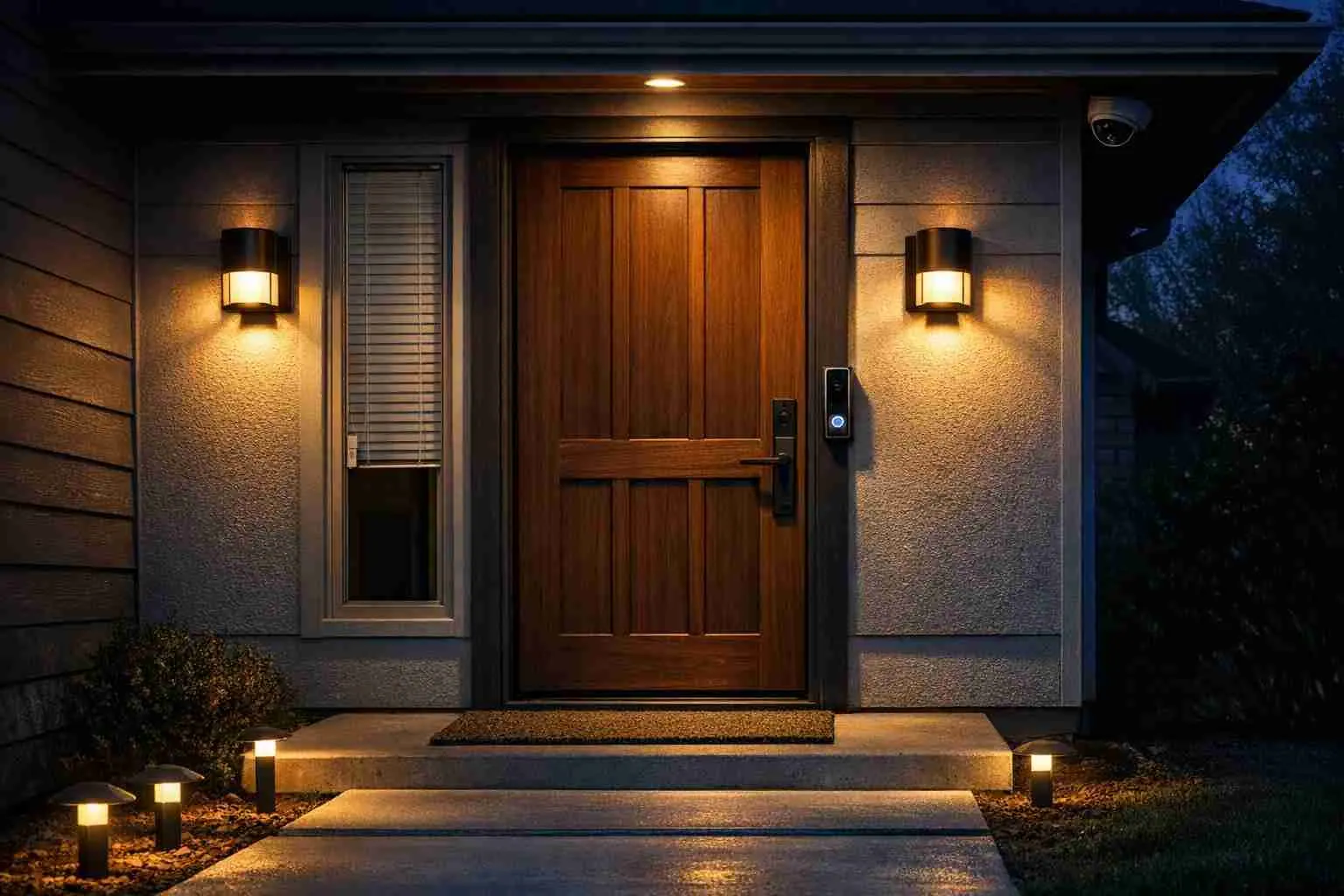
After upgrading your door locks, adding motion-activated outdoor lighting is a smart next step for bolstering home security. These lights are designed to deter intruders by instantly illuminating dark areas when they detect movement, making it harder for anyone to hide. They also make walkways and stairs safer at night.
Beyond just scaring off intruders, motion-activated lights reduce hiding spots and can alert neighbors to unusual activity. Unlike traditional lights that stay on all night, these only activate when needed, helping you save on electricity while maintaining effective security. Professional installation typically costs between $350 and $500, which includes both materials and labor.
Focus on Entry Points and Blind Spots
Start by illuminating all key entry points, including your front door, back door, side doors, and the door connecting your garage to your house. Ground-floor windows are another common entry point.
Don't overlook driveways and garages. These areas are often targeted for vehicle and tool theft. Other important spots include side yards, corners of your home, areas near fences, and storage sheds, places where intruders might hide. To ensure full coverage, position multiple lights so their beams overlap, leaving no dark gaps. Aim each sensor toward an approach to your home, such as the driveway, front porch or backyard, so the light comes on when someone steps into view.
Use Energy-Efficient LED Bulbs
For outdoor security lighting, LED bulbs are an excellent choice. According to the U.S. Department of Energy, LEDs use 75% less energy and last up to 25 to 50 times longer than incandescent bulbs, reducing the need for frequent replacements and lowering maintenance costs.
When selecting brightness levels, consider the area you're lighting: driveways and large spaces need brighter fixtures than pathways and stairs. Choose fixtures with an IP65 rating or higher to ensure they can withstand rain, snow, and dust. Adjust sensitivity settings to minimize false triggers from small animals or wind-blown debris, and for added security, pair your lights with surveillance cameras. This combination not only enhances your safety but also strengthens your overall home defense strategy.
3. Secure Windows with Locks and Reinforcements
Windows are a common weak point in home security. Much like securing doors and using proper lighting, reinforcing windows is a key part of a solid home security plan. Standard factory latches are designed more for weatherproofing than for security, making them easy to bypass. Sliding windows are particularly vulnerable, as intruders can lift the panels out of their tracks if they’re not properly secured. Adding secondary locks and physical reinforcements can make breaking in through a window much harder and more time-consuming.
Install Pin Locks or Track Blockers
Pin locks are a practical and effective solution for double-hung and sliding windows. By drilling through both window frames and inserting a steel pin, you can prevent the window from sliding or being lifted out. For added security, drill the hole at a slight downward angle to keep the pin firmly in place. These locks are budget-friendly, typically costing between $10 and $50 each.
For sliding windows, you can use track clamps or a Charley bar, a simple metal rod placed in the track, to block the window from moving, even if the latch is compromised. If you prefer to keep windows slightly open for ventilation, hinged wedge locks allow you to secure the window in a partially open position (less than 6 inches), ensuring airflow without sacrificing safety. Another useful trick is to drive sheet-metal screws partway into the upper tracks of sliding windows. This prevents the sash from being lifted over the lower track. These additions significantly enhance window security and work well alongside other home protection measures.
Use Security Film or Shatter-Resistant Glass
While locks keep windows from being opened, security film protects the glass itself. This transparent layer adheres to the window and holds shattered glass together if struck. This forces intruders to hit the glass repeatedly to create an opening large enough to climb through, a noisy and time-consuming process. Security film costs between $3 and $8 per square foot and can slow down burglars who rely on speed and stealth.
For areas at higher risk, consider upgrading to laminated glass. This type of glass consists of two panes fused to a plastic interlayer, which stays intact even after repeated impacts. For maximum protection, polycarbonate shields are an option, they’re about 200 times stronger than glass, by one maker's figure, but come with a much higher price tag, costing roughly four times as much. Focus these reinforcements on ground-floor windows and those hidden from street view, as these are the most likely targets.
4. Install a Professional Home Security System
Adding a professionally monitored security system to your home provides a crucial layer of protection that physical measures like locks and lights can't fully achieve. While sturdy locks and bright outdoor lighting help deter intruders, a monitored system ensures that someone is always ready to respond, no matter where you are. In a University of North Carolina at Charlotte survey of convicted burglars, about 83% said they would try to find out whether an alarm was present before attempting a burglary, and 60% said they would seek another target if there was one. Of those who discovered an alarm mid-attempt, half said they would stop, making these systems an effective deterrent.
Professional monitoring services operate 24/7. Once an alarm is triggered, trained personnel verify the situation and contact emergency services, so an alert is not missed because your phone is on silent.
Modern systems go beyond burglary prevention, offering sensors for fire, carbon monoxide, floods, and even freezing temperatures. Many also integrate with smart home platforms like Amazon Alexa, Google Assistant, or Apple HomeKit, letting you control locks, lights, and thermostats with automated routines. Costs for monitoring range from $15 to $53 per month, averaging around $32.26. Starter equipment kits typically cost between $200 and $600, and professional installation fees fall between $99 and $199. As a bonus, the Insurance Information Institute says you can usually get a homeowners insurance discount of at least 5% for a burglar alarm, and some companies cut premiums by as much as 15 or 20% for a sprinkler system plus an alarm that rings at a monitoring station.
Choose Between DIY and Professional Monitoring
When deciding between DIY and professional monitoring, consider how much responsibility you're comfortable taking on. DIY systems send alerts directly to your smartphone, leaving you to evaluate the situation and contact emergency services if needed. On the other hand, professional monitoring takes this burden off your shoulders. Trained agents automatically verify alarms and dispatch help, ensuring assistance arrives even if you're unavailable.
| Feature | DIY Monitoring | Professional Monitoring |
|---|---|---|
| Notifications Sent To | Homeowner (Mobile App) | Professional Monitoring Center |
| Emergency Response | Homeowner must call 911 | Center dispatches authorities |
| Monthly Cost | $0 to $10 | $15 to $60+ |
| Reliability | Dependent on phone/signal | 24/7 redundant coverage |
| Insurance Discount | Rarely eligible | Often eligible (up to 15 to 20% with sprinklers) |
Professional systems also use dual connectivity, Wi-Fi and cellular backup, to ensure alarms are reliably transmitted. Look for systems with at least 24 hours of battery backup and hardware listed to UL or ETL standards. Regularly test your system by performing a "walk test" of all sensors and checking the cellular failover twice a year.
Use Visible Deterrents
Visible signs of a security system can help discourage intruders. In the UNC Charlotte survey, about 83% of burglars said they would try to find out whether an alarm was present before attempting a break-in. Place signs along main approach paths like front walkways, side gates, and driveways. Ground-floor windows and entry doors are ideal spots for decals. Even if burglars suspect these signs might not be real, the psychological impact is often enough to make them move on.
Adding external sirens can further enhance your home’s security. These devices not only alert neighbors but also create enough noise to scare off intruders. Mount them high to prevent tampering. Visible cameras at key entry points reinforce the message that your home is under constant watch.
5. Install Security Cameras at Key Locations
Security cameras are an essential layer of protection, combining surveillance with a visible deterrent. They not only monitor activity but also discourage potential intrusions. By placing cameras in these vulnerable areas, you create a network that captures evidence and reduces the likelihood of unauthorized entry.
When selecting cameras, focus on features tailored to your property's needs. Outdoor cameras should have strong weather resistance, look for a minimum IP65 rating, with IP67 being ideal for harsher conditions. Features like HDR can minimize sun glare, while advanced options such as person detection, infrared night vision, or motion-activated LED lighting ensure visibility even in complete darkness.
Place Cameras at Main Entry Points
Start by securing all ground-floor entry points, including front, back, and side doors, as these are common targets for break-ins. Don’t forget to cover your driveway and garage, as they often house high-value items and can provide direct access to your home. The National Insurance Crime Bureau reports that 34% of passenger vehicles stolen in 2022 were recovered within a day of being reported stolen.
For optimal placement, mount cameras 8 to 10 feet above ground, this height discourages tampering while still capturing clear facial details. Position them below light fixtures to maintain good illumination without the light interfering with the lens. To reduce glare, aim cameras away from direct sunlight, ideally facing north or under eaves. Mounting a camera at second-floor level makes it harder for a burglar to knock it out.
Before finalizing a location, test the camera for 24 hours to ensure stable connectivity and clear footage, regardless of lighting conditions. This simple step ensures your system works seamlessly as part of your broader home security plan.
Choose Cameras with Remote Monitoring
Modern security cameras often come with mobile apps, allowing you to view live feeds and receive real-time alerts from anywhere. Opt for cameras with cloud storage to securely back up footage, protecting your evidence even if the camera is damaged or stolen. Wide-angle lenses, ranging from 130° to 180°, help minimize blind spots and provide comprehensive coverage. Covering the yard can catch suspicious activity before it reaches your home, and person detection reduces false alerts from animals.
To maintain clear video quality, clean your camera lenses monthly with a microfiber cloth.
6. Reinforce Door Frames, Hinges, and Strike Plates
Adding stronger locks and better lighting is a great start, but reinforcing your door's structure takes home security to the next level. These upgrades ensure that even the toughest locks do their job by keeping your entry points solid and resistant to force.
Here’s the issue: even the best deadbolt won’t help if the door frame gives way. Most homes come with standard screws that are only 1/2 to 3/4 inches long. These screws barely reach beyond the thin door jamb and don’t anchor into the sturdy wall studs behind it. This makes doors vulnerable to being kicked in. Considering that 56.7% of U.S. burglaries in 2018 involved forcible entry, reinforcing your door frame is a smart and affordable way to boost security.
Start by replacing those short screws with 3- to 3.5-inch hardened steel screws for your hinges and strike plates. These longer screws anchor securely into the structural studs behind the frame. When installing them, stagger their placement to avoid splitting the wood.
Next, upgrade to a heavy-duty strike plate. Look for an elongated or box-style plate that uses four or more screws instead of the standard two. This spreads the force over a larger area, reducing the chance of the wood splintering during an attempted break-in. Adding a metal reinforcement plate over the door jamb strike area further strengthens it and protects against splitting. If you’re handy, a DIY door reinforcement project can cost between $100 and $200. Hiring a locksmith, on the other hand, typically costs between $107 and $242.
Don’t forget about the door itself. Reinforce the edge where the latch and deadbolt sit by installing a metal door wrap or edge plate. This simple addition helps prevent the door from cracking under pressure. For added stability, fill any gaps in the door jamb with wooden shims before securing it with screws.
A small investment in upgraded deadbolt assemblies and strike plates pays off by hardening doors against break-ins.
7. Secure Sliding Doors and Garage Doors
Sliding glass doors and garage doors are common weak spots in home security. These areas require specific attention to bolster security, complementing earlier measures like reinforced locks and frames.
Sliding doors, in particular, pose a unique risk. Their factory latch locks are designed for privacy, not protection, and can often be bypassed with basic tools. Older sliding door models, with weak locking mechanisms on exposed tracks, are especially vulnerable.
Garages, on the other hand, present a different challenge. Thieves can exploit the emergency release mechanism using something as simple as a wire coat hanger. Once inside, they can quietly work on the door connecting the garage to your home, which is often the weakest point in your security setup.
Use Anti-Lift Devices for Sliding Doors
One quick and affordable way to secure sliding doors is by placing a security bar in the bottom track. These bars, which cost around $20 to $35, prevent the door from sliding open. For a more budget-friendly option, a wooden dowel priced at $3 to $5 can also work, though it may break under force.
To stop thieves from lifting the door off its track, install #8 or #10 sheet metal screws in the upper track channel at 6-inch intervals. These screws should leave just enough clearance for smooth sliding but not enough for the door to be lifted out. For added protection, apply 8-mil (or thicker) security film, costing about $50 to $80 per door, that meets ASTM standards. This film makes it harder to break the glass during a forced entry attempt.
Secure Garage-to-House Entry Doors
While sliding doors need anti-lift measures, the door connecting your garage to your home requires stronger reinforcements. This door should be treated with the same level of security as your front door. Replace any hollow-core door with a solid-core wood or steel door, which costs between $150 and $400. Pair it with an ANSI Grade 1 deadbolt and a reinforced strike plate secured with 3-inch screws into the wall studs. If the garage is compromised, this door becomes your only barrier.
For the garage door itself, consider installing a garage shield ($20 to $40) to block access to the emergency release mechanism, preventing the wire hanger trick. Another option is to secure the release lever to the carriage with a light-duty zip tie, strong enough to resist tampering but designed to break during an actual emergency.
Lastly, avoid leaving garage door remotes on your car's visor. If your car is broken into, the remote provides direct access to your home. Instead, opt for a keychain remote or a smartphone app for added security.
8. Update Security Codes and Smart Devices
Once you've secured your home's physical entry points, it's time to focus on the digital side. Smart devices like locks, keypads, and garage door openers offer convenience, but they also come with risks. The problem often lies in how access codes are managed. Using factory default settings or obvious codes like "1234" or your street address makes it far too easy for someone to gain unauthorized access.
Start by replacing all default codes on your smart devices as soon as they’re installed. This includes the lock itself, management apps, your Wi-Fi hub, and your router. Choose strong, lengthy codes, an 8-digit code is much harder to crack than a 4-digit one. Avoid using personal information like birthdays, phone numbers, or ZIP codes. Instead, try converting a phrase into numbers; for example, "safe home" could translate to 72334663.
Make it a habit to update your codes twice a year, or immediately if you suspect they've been compromised. Temporary codes for guests or service workers should be deleted as soon as they’re no longer needed. Moving into a new home? Update all digital security codes before you unpack. If your garage door opener is over a decade old, consider upgrading to a rolling-code model. These modern openers, usually priced between $150 and $300, change their access code with every use, making it nearly impossible for someone to intercept and reuse the signal.
Secure your smart lock’s management app with a unique password of at least 12 characters and enable two-factor authentication, app-based options are safer than SMS. Since these devices rely on your home Wi-Fi, ensure your router is protected with WPA2 or WPA3 encryption and a strong password. Disable risky features like WPS and UPnP, and always enable automatic firmware updates. Automatic updates shorten the time a device stays exposed to known security flaws.
For added security, assign unique codes to each person who needs access. This not only creates accountability but also makes it easy to revoke someone’s access without disrupting others. Regularly review access logs and audit codes every three months. Never write down access codes or store them in an unencrypted format. Keep codes secret, and never enter one in front of delivery people, neighbors, or anyone else.
9. Create a Nightly Security Routine
Make it a habit to go through a nightly security routine, locking every door and window. In Bureau of Justice Statistics data on burglaries where someone was home and no force was used, offenders got in through an unlocked door or window 28% of the time and an open one 27% of the time.
Start by walking through your property and checking every exterior door. This includes the front, back, and side doors, as well as the often-overlooked door connecting the garage to your home. This step ensures the most vulnerable points are secured. Double-check that all windows, especially those on the ground floor and basement, are closed and locked. Don’t forget to secure your garage, lock both the main garage door and the interior door leading into your house.
While upgraded locks and cameras add layers of protection, a nightly check ensures these tools are actively working for you. Pay attention to less obvious entry points like sliding glass doors and backyard gates. Close blinds and curtains to keep valuables out of sight from potential intruders. Before wrapping up, arm your security system and confirm that outdoor motion-activated lights are operational.
For added convenience, integrate smart home technology into your routine. Use a single command to lock doors, secure the garage, and activate your security system. Many security apps also allow you to check the status of locks and sensors remotely.
10. Take Action to Secure Your Home
In the United States, 2018 FBI data counted a burglary about every 26 seconds, with an average loss of $2,799 per offense. The good news? Many break-ins can be prevented with the right precautions. By following the strategies in this checklist, you can make your home far less appealing to burglars.
Taking action starts with a layered defense strategy. By combining physical barriers and visible deterrents, as discussed earlier, you make your home a harder target.
To simplify the process, here’s a focused three-week action plan to improve your home’s security:
- Week 1: Install Grade 1 deadbolts and reinforce strike plates. Start a nightly routine to ensure all doors and windows are locked.
- Week 2: Add motion-sensor lights to every entry point and secure ground-floor windows with secondary locks.
- Week 3: Set up an alarm system or security cameras, and make sure to display visible security signs.
While many of these upgrades can be done yourself, a professional service can help identify vulnerabilities you might miss. Companies like Roadrunner Lock and Key install high-security deadbolts, rekey locks for new homeowners, and even integrate smart lock systems. Professional help ensures critical components, like strike plates, are securely anchored into wall studs for maximum protection.
These steps can transform your home into a safer space, offering both security and peace of mind.
FAQs
No question matches that. Call or text (505) 347-2895 and ask it.

Roadrunner Lock and KeyAnswers from the shop
Open 24/7
Pick a question, or search above. You get the straight answer, the way we would give it on the phone.
Which security upgrades should I do first on a tight budget?
If you're working with a limited budget, there are plenty of affordable ways to improve home security. Start with stand-alone door and window alarms, these are budget-friendly and provide an immediate deterrent to intruders. Automatic timers for lights are another smart option, giving the impression that someone is home even when you're away. Upgrading your locks with longer screws can make them sturdier and harder to tamper with. You can also add simple barriers like a doorstop alarm or a sturdy rod in the track of sliding doors to enhance security without spending much.
Roadrunner Lock and Key
Should I rekey my locks or replace them?
Rekeying is a cost-effective option that involves modifying the internal pins of your existing locks so they work with a new key, without changing the entire lock. This is a great choice if your locks are in good shape but you need new keys, for instance, after moving into a new place.
On the other hand, replacing locks is the way to go if your current ones are worn out, outdated, or if you're looking to upgrade to modern features like keyless entry systems with completely new hardware.
Roadrunner Lock and Key
Do I need professional monitoring or is DIY monitoring enough?
Choosing between professional monitoring and DIY monitoring comes down to what you prioritize in a security system.
DIY systems are often more affordable and put you in control of managing alerts. You’ll receive notifications directly and decide how to respond. On the other hand, professional monitoring offers round-the-clock oversight by trained operators who can quickly contact emergency services when needed.
If having a fast, professional response is your top priority, professional monitoring is the better choice. But if you’re looking for a more flexible and budget-conscious option, DIY monitoring can work well, especially when combined with other security measures like reinforced doors or windows.
Roadrunner Lock and Key
3 questions